Go team!
EngageRocket aims to help HR departments make data-informed decisions
radical candour from a deep generalist
Super cool report out about global startup cities :: Rise of the Global Startup City
The entire PDF can be found here :: http://startupsusa.org/global-startup-cities/report.pdf
Some snapshots I find interesting.
Top 10:
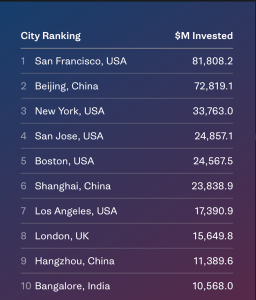
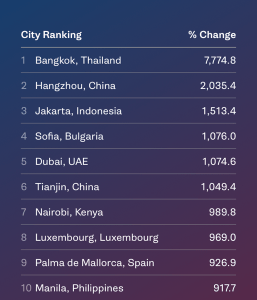
The cities with the most growth – wow Bangkok but SEA cities get 3 out of the top 10:
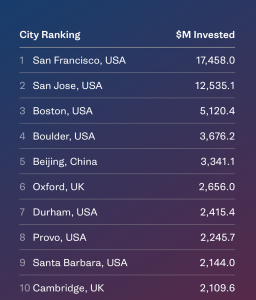
This next one I really love which shows which cities have the most investment per capita. Which means when you think about the reverse of this just note that when people talk about SEA region being frothy or too much capital the actual truth it is that it is just getting started and there is not enough capital to cover the future given the amount invested per capita:
Gonna dig in some more to read the full report.
Should probably end with this one:
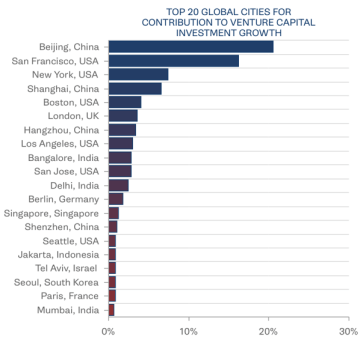
This is cool – Dyson to manufacture electric cars in Singapore:
Good read. Complicated subject since anytime a VC wanna governance it is usually taken to mean not founder friendly these days.
Tough one. I think we have to start aligning around “company friendly” which means governance since the board and the VC are there to protect the company.
Tech Founders’ Absolute Power Is Destroying Company Culture | WIRED
Hope more folks than Fred start beating this drum.
Seems most folks have lost track of what KYC actually means these days.
Cool to hear Amit on the radio:
Amit Anand, Managing Partner/Co-Founder, Jungle Ventures, joined Rishaad Salamat and Bryan Curtis on Daybreak Asia to discuss investment opportunities in South East Asia. He looks into the explosion in internet users across the region, how start-ups are taking advantage of that and some of the most interesting companies he has invested in.
— Read on www.bloomberg.com/
Still trying to wrap my head around this concept.
I might read the book but this deck is a good place to start.
Add the Saudi mess in and the vision fund and strategy looks flawed:
As interest rates rise, the venture-capital model pioneered by SoftBank and followed by the likes of Tencent is breaking down.
Will be interesting to watch how this expands:
We all know the bicycle sharing craze – but have you heard about e-scooter sharing? We just interviewed Zachary Wang the CEO of Neuron Mobility which just expanded to Chiang Mai.
— Read on disrupting.asia/interview-with-zachary-wang-of-neuron-mobility/
Long in depth read on not just WeChat but a few of the Chinese companies trying to win in India.
The whole thing is good but the summation is spot on.
How WeChat faded into the silence in India | FactorDaily:
Sahai says that for Chinese companies mainly those supported by the BAT (Baidu, Alibaba, Tencent) trio, China market is always the core business and the rest of the market is an expansion, which creates some sort of inertia when dealing with the competition here in India.
But, it has become increasingly clear that India as a market cannot be generalised. As Sajith Pai, who works with VC firm Blume Ventures, puts it, India is divided into three consumer segments: the first 100 million, mainly the urban or affluent Indians and are the main targets of indulgent e-commerce brands; the second 100 million classified as the aspiring class; and the last a little over a billion — three segments he calls the splurgers, strivers and survivors.
Pai says that most global companies investing in India, including Apple, Facebook and Instagram are aware of this graph and think of India as a secondary market by targeting the first 100 million. Things may be changing from the WeChat days with a new crop of Chinese companies trying to cater to the new 100 million, including rural India, new internet users and youngsters. Case in point: MX player, NewsDog, Shareit, and UCBrowser that cater to the new internet users in India have a higher chance of surviving in India because they understand the new Indian users better.
Still, unlike China where there is a big government-initiated push for a common language and similar culture, cultural diversity in India, like lack of a common language, city structures, and economic disparity makes it difficult to generalize the Indian market. That’s the lesson that Tencent – and, indeed, the BAT trio – seems to have learnt and are only investing in large Indian companies.
 Dreampipe's Blog